
Are You Lifting Wide Objects Safely? Here’s to Better Balance!
Share the Load: How Forklift Spreader Bars Help You Handle Big Jobs
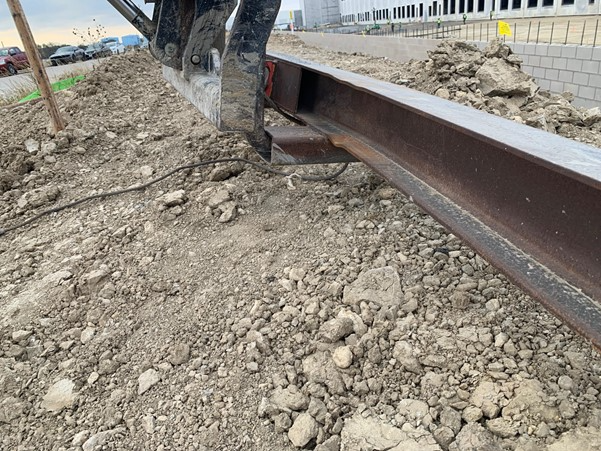
When you’re dealing with long, heavy loads like rebar cages, metal trusses, or steel beams, every lift can feel like a gamble—especially if you’re using the wrong tools.This photo from our safety archives shows what not to do: a homemade spreader bar dangerously balanced on forklift forks. No locking pins. No safety chains. No compliance. Just risk.
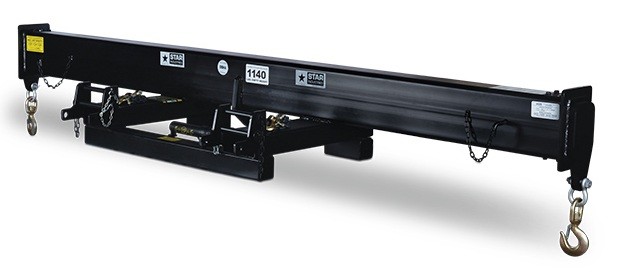
At Star Industries, we believe there’s a better way. That’s why we build heavy-duty forklift spreader bars designed to meet ANSI/OSHA safety standards and the harsh demands of real job sites.
Why a Forklift Spreader Bar Makes Sense
Long, flexible loads are awkward. Improper rigging leads to:
- Tipping and spinning
- Sling-induced crushing
- Bent beams and broken timelines
A certified spreader bar attachment distributes the load safely, reduces sling angle issues, and keeps your team—and your materials—out of harm’s way.
Built Star Tough: Spreader Bar Features
Here’s what makes Star’s forklift spreader bars a must-have on any serious jobsite:
Universal “Slip-on-Forks” Fit
Works with straight mast and extendable reach forklifts—just slide it on and pin behind the heel.
Compliance You Can Count On
Every model meets or exceeds ANSI & OSHA requirements. No gray areas. No guessing.
Heavy-Duty Performance
Handles from 5,000 lbs to 34,000 lbs depending on the model. Fixed and extendable versions available. Telexcoping lifts range in width from 8 feet to 20 feet.
Versatile Applications
Perfect for:
- Rebar & cages
- Steel beams
- Wood & metal trusses
- Roofing sheets and more
Our spreader bars are engineered, built, and tested in the USA to handle tough jobs with safety, speed, and precision. You’ll find them on job sites nationwide—especially with metal building erectors who need a reliable solution for lifting long lengths of material.
See It In Action
Ready to Level Up Your Lifting Power?
Our team can help you choose the right forklift spreader bar for your fleet. Whether you need fixed-length, extendable, or even crane-compatible options—we’ve got you covered.
Visit Our Site and Get the Spec Sheet Here
✅ Do’s: Best Practices for Spreader Bar Safety
- Use only certified spreader bars
- Ensure the attachment is engineer-certified and labeled with all required safety specs (capacity, manufacturing date, etc.).
- Ensure the attachment is engineer-certified and labeled with all required safety specs (capacity, manufacturing date, etc.).
- Inspect attachments regularly
- Check for broken welds, deformations, cracks, missing safety pins, and loose anchor bolts or hooks.
- Check for broken welds, deformations, cracks, missing safety pins, and loose anchor bolts or hooks.
- Follow ANSI Standards 6.2.23 and 6.2.24
- Use manufacturer-approved attachments only, with proper documentation and load charts.
- Use manufacturer-approved attachments only, with proper documentation and load charts.
- Attach spreader bars correctly
- Use locking pins for each fork and safety chains secured tightly to the forklift carriage (horizontal pull, no slack).
- Use locking pins for each fork and safety chains secured tightly to the forklift carriage (horizontal pull, no slack).
- Ensure the bar is level
- Keep anchor points even to prevent instability and hook stress.
- Keep anchor points even to prevent instability and hook stress.
- Distribute the load evenly
- Balance loads on both sides of the bar to prevent tipping, spinning, or swinging.
- Balance loads on both sides of the bar to prevent tipping, spinning, or swinging.
- Understand load limits
- Never exceed the bar’s rated capacity or the forklift’s limits. Refer to manufacturer specs or contact Star Industries for clarification.
- Never exceed the bar’s rated capacity or the forklift’s limits. Refer to manufacturer specs or contact Star Industries for clarification.
- Educate your team
- Make sure all operators and handlers understand how to properly rig and use the attachments.
❌ Don’ts: Unsafe Practices to Avoid
- Don’t use homemade or modified attachments
- Avoid makeshift, ad-hoc, or non-certified bars that violate safety standards.
- Avoid makeshift, ad-hoc, or non-certified bars that violate safety standards.
- Don’t ignore missing safety components
- A bar without locking pins, anchor points, or safety chains is a serious hazard.
- A bar without locking pins, anchor points, or safety chains is a serious hazard.
- Don’t secure with backward fork tilt
- Tilting forks backward aggressively is not a substitute for proper attachment and violates safety guidelines.
- Tilting forks backward aggressively is not a substitute for proper attachment and violates safety guidelines.
- Don’t use an unapproved attachment
- If it’s not explicitly approved by the forklift manufacturer or lacks a load chart, it’s non-compliant.
- If it’s not explicitly approved by the forklift manufacturer or lacks a load chart, it’s non-compliant.
- Don’t assume load distribution is “close enough”
- Uneven or off-center loading is dangerous and avoidable with proper planning.
- Uneven or off-center loading is dangerous and avoidable with proper planning.
- Don’t delay inspections or maintenance
- Failing to catch damage or fatigue early can lead to critical failure during a lift.
- Failing to catch damage or fatigue early can lead to critical failure during a lift.
- Don’t cut corners under time pressure
- Safety shortcuts to “save time” often result in delays, injuries, or jobsite shutdowns.
- Safety shortcuts to “save time” often result in delays, injuries, or jobsite shutdowns.
- Don’t ignore safety training
- Inadequate knowledge among staff about safe rigging and bar usage increases risk.
What Should You Do If You See a Star Attachment on a Job Site?
We love seeing our attachments in action. Send us your photos and be featured on our social channels in our “Star Attachments in the Wild” series.
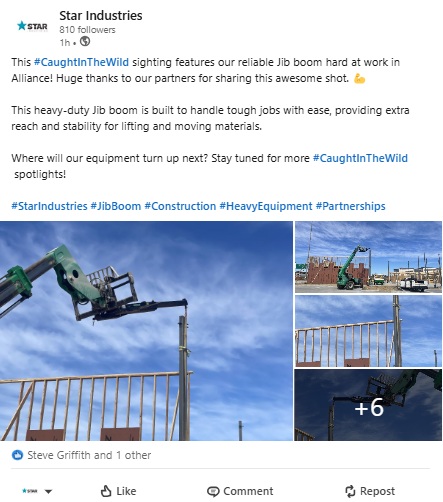
Email info@starindustries.com or post your content and tag us!